

Many people enter coaching with genuine commitment, then walk away from sessions feeling vaguely unsatisfied. Not because the coach wasn't skilled, but because they weren't sure how to get most out of coaching sessions themselves. The truth is that coaching is a partnership where you, the client, hold the steering wheel. Your coach facilitates. You drive. Understanding that distinction is the single most clarifying shift you can make, and everything in this guide builds from there.
Table of Contents
- Key takeaways
- How to get most out of coaching sessions: start before you arrive
- Making the most of the session itself
- Working between sessions to reinforce growth
- Monitoring progress and adjusting your approach
- My honest take on what actually makes coaching work
- Ready to go deeper with your coaching?
- FAQ
Key takeaways
| Point | Details |
|---|---|
| Preparation shapes results | Arriving with specific challenges and a clear focus transforms session quality immediately. |
| Honesty accelerates progress | Bringing real, current difficulties to sessions produces deeper insight than polished updates. |
| Between-session work is the real work | Treating post-session commitments as experiments, not homework, embeds lasting change. |
| Progress takes time to show | Behavioural shifts appear early, but broader impact typically emerges 90 to 180 days in. |
| Flexibility beats fixed schedules | Adjusting session frequency and focus as you grow is more effective than rigid scheduling. |
How to get most out of coaching sessions: start before you arrive
Most people underestimate how much preparation shapes what happens in the room. If you turn up without a clear focus, you will spend the first third of your session figuring out what to talk about. That is expensive time, whether you are paying for it directly or investing it from your working week.
Before each session, spend ten to fifteen minutes asking yourself one question: what is the most pressing challenge I am facing right now? Not a vague theme like "leadership" or "confidence," but a specific situation. A conversation you are dreading. A decision you have been circling for weeks. A piece of feedback that stung. Clients who bring live, complex issues rather than general topics consistently get deeper benefit from their sessions.
Here are practical ways to prepare well:
- Write a brief session agenda. Two or three bullet points covering what you want to address and what outcome you are hoping for. You do not need to stick to it rigidly, but having it focuses your thinking before you walk in.
- Review your previous session notes. What did you commit to doing? What happened when you tried it? Bringing that back into the room creates continuity and momentum.
- Note specific examples. If you want to discuss a relationship challenge at work, bring the actual words that were said. Specificity gives your coach something real to work with.
- Check your mindset. Are you arriving open to being challenged, or are you hoping for validation? Both are human, but only one produces growth.
Research confirms that voluntary participation and specific goals strongly predict coaching success. Clients who choose coaching and arrive with clear intentions consistently achieve more measurable results than those who treat it as a box to tick.
Pro Tip: Keep a small notebook or voice memo app dedicated to coaching. When something difficult happens between sessions, capture it immediately. That raw material is gold for your next conversation.
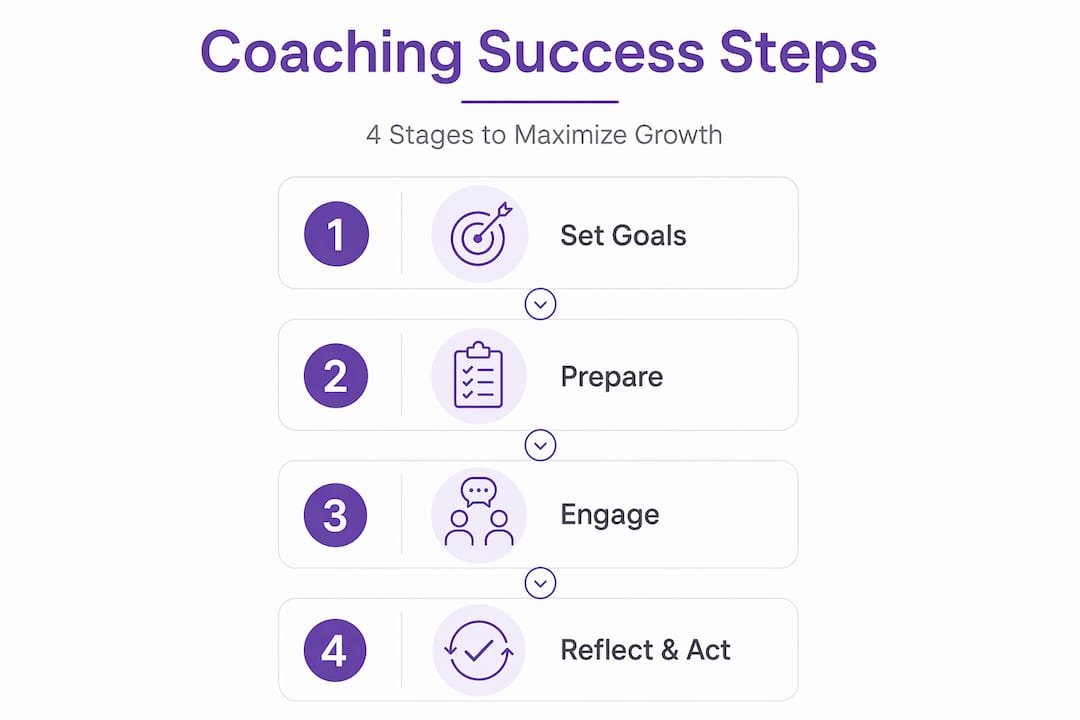
Making the most of the session itself
Preparation gets you to the door. What you do inside the session determines whether you leave with genuine insight or just a pleasant conversation.
The single most important shift is treating your session as a laboratory for diagnosis, not a debrief. You are not there to report on your week. You are there to examine something real, turn it over, and understand it more deeply than you could alone. That requires honesty, and sometimes discomfort.
Here is how to engage well during sessions:
- Lead with what is hardest. Resist the urge to warm up with easy wins. Bring the thing you have been avoiding, because that is almost certainly where the growth is.
- Ask clarifying questions back. If your coach offers a reflection or reframe, do not just nod. Ask yourself whether it actually rings true. Push back if it does not.
- Stay in the present. It is tempting to talk about the past in abstract terms. Your coach will be most useful when you are working on something current and specific.
- Lean into the discomfort. Sustained growth requires honest self-examination, and that is rarely comfortable. If a question makes you want to change the subject, that is a signal to stay with it.
- Make a clear commitment before you leave. Not a vague intention, but a specific action or experiment you will try before your next session. "I will have that conversation with my manager on Thursday" beats "I'll think about how to approach it."
- Collaborate on pacing. If sessions feel too frequent or not frequent enough, say so. Coaching effectiveness depends on quality and alignment, not on hitting a fixed number of meetings.
Pro Tip: If you find yourself giving your coach a lot of context and backstory, pause. Ask: "What is the question I actually need to answer here?" That one move can save twenty minutes and get you to the heart of things faster.
Working between sessions to reinforce growth
Here is something most coaching guides skip: the session itself is not where the transformation happens. It is where you gain clarity. The transformation happens in the days that follow, when you take that clarity into real situations and test it.

The most effective clients treat between-session activities as experiments, not homework. The difference matters more than it sounds. Homework implies a task to complete and hand in. An experiment implies curiosity. You try something, observe what happens, and bring the results back regardless of whether they went well.
Some practical ways to make the most of the time between sessions:
- Keep a coaching journal. Even five minutes of reflection after a relevant experience builds self-awareness faster than any single session can. Note what you tried, what you noticed, and what surprised you.
- Apply new behaviours deliberately. If your session surfaced an insight about how you communicate under pressure, look for opportunities to practise that specific thing. Do not wait for the perfect moment.
- Invite feedback from people you trust. Ask a colleague or friend to notice and name the behaviour you are working on. External observation catches blind spots your own reflection will miss.
- Bring failures back to the next session. This is not a sign that coaching is not working. It is the work.
"The real work of coaching happens between sessions. Every difficult conversation you attempt, every moment you catch yourself reverting to old patterns, every small win you almost dismiss — that is your coaching in action."
Coaching typically spans 3 to 12 months with 6 to 12 sessions for durable change. That means the weeks between sessions are not downtime. They are the majority of your coaching experience.
Monitoring progress and adjusting your approach
One of the most common frustrations in coaching is not knowing whether it is actually working. That uncertainty often leads people to either abandon the process too early or continue without examining whether the approach still fits.
The table below outlines what to track and when to expect results:
| What to measure | When to expect it | How to track it |
|---|---|---|
| Behavioural shifts | First few sessions | Self-reflection, coach feedback |
| Confidence in specific situations | 4 to 8 weeks | Personal journal, peer observation |
| Broader performance impact | 90 to 180 days | 360 feedback, manager input |
| Clarity on goals and decisions | Ongoing | Session notes, decision log |
Research shows that behavioural shifts appear within the first few sessions, while broader indicators like performance and team impact take 90 to 180 days to become visible. Knowing this prevents you from drawing premature conclusions.
Setting specific, measurable goals at the outset makes this easier. Vague goals like "become a better leader" cannot be measured. Specific goals like "reduce the number of times I avoid difficult conversations at work" can be. You will know when things are shifting.
Be honest with your coach about what is and is not working. If the sessions feel too theoretical, say so. If you need more challenge or more support, name it. The ROI of coaching depends heavily on goal specificity and ongoing measurement. Protecting that return means staying actively engaged in shaping the process, not just showing up and hoping for the best.
My honest take on what actually makes coaching work
I have worked with clients across a wide range of challenges, from career pivots and confidence crises to communication breakdowns and leadership transitions. And the pattern I see most clearly is this: the clients who get the most from coaching are not the ones with the most pressing problems. They are the ones who show up most honestly.
What I mean is that many people come to coaching hoping to be understood and affirmed. That is a reasonable human desire. But the sessions that produce real change are the ones where the client is willing to be genuinely uncomfortable. Where they bring the situation they are most embarrassed about, not the one that makes them look thoughtful and self-aware.
I have also noticed that clients often underestimate the value of the work they do between sessions. They come back apologising for not completing what they committed to, when actually the fact that they did not do it is the most interesting thing to explore. Resistance is data. Avoidance is information. Nothing is wasted.
The other pitfall I see regularly is treating coaching as something that happens to you rather than something you actively shape. If a session does not feel useful, that is worth saying out loud. Your coach cannot read your mind, and a good coach will welcome that honesty. The best coaching relationships I have seen are ones where the client feels genuinely empowered to redirect, challenge, and co-create the process.
If you are reading this and wondering whether you are getting enough from your sessions, the answer is probably that you have more agency than you are currently using.
— Bex
Ready to go deeper with your coaching?
If this article has made you think about what you want from your coaching experience, Wearedelphi offers targeted programmes built around the challenges that matter most to you.
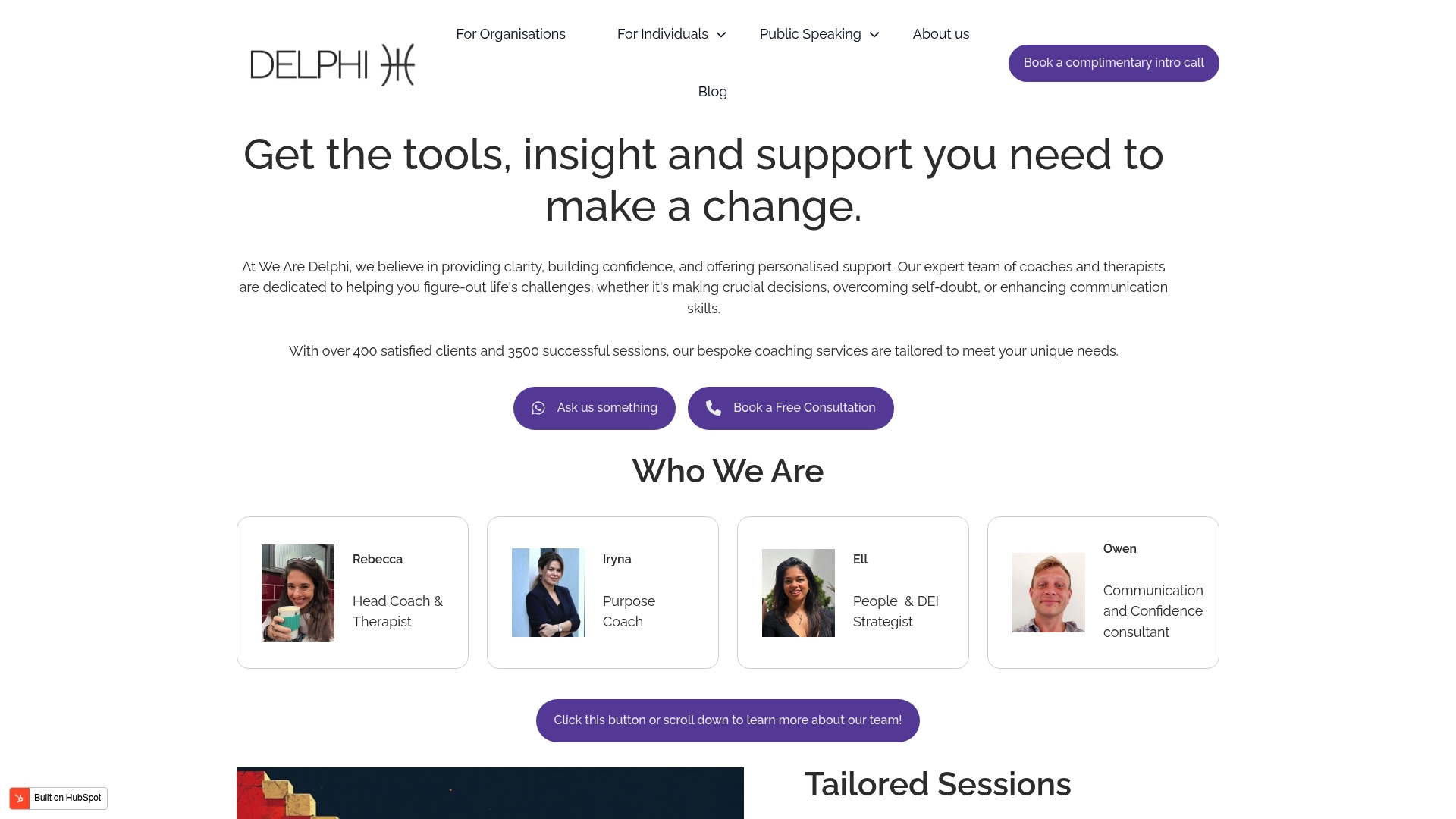
Whether you are looking to build career momentum with the Momentum Career Course, find greater clarity through purpose-focused coaching, or strengthen your communication and confidence, Wearedelphi's tailored sessions give you a focused environment to do exactly that. With over 3,500 sessions delivered and a track record of real, measurable change, it is a practical next step for anyone serious about making coaching count.
FAQ
How do I prepare for a coaching session?
Before each session, identify one specific challenge or situation you want to explore. Reviewing your notes from the previous session and writing a brief agenda will help you use the time well.
How many coaching sessions do I need to see results?
Engagements of 6 to 12 sessions over 3 to 12 months are most effective for durable change. Early behavioural shifts are common, but broader impact typically takes 90 to 180 days to become visible.
What should I do between coaching sessions?
Treat your post-session commitments as experiments rather than tasks. Keep a journal, apply new behaviours in real situations, and bring both successes and failures back to your next session for review.
Why do I feel like my coaching sessions aren't working?
This often comes down to session preparation, goal clarity, or honest communication with your coach. Specific goals and voluntary engagement are among the strongest predictors of coaching success. If something is not working, name it directly in your next session.
How do I know if coaching is actually making a difference?
Track specific, observable behaviours rather than vague feelings. Use a journal, invite feedback from trusted colleagues, and review your original goals every few weeks. Broader impact on performance and relationships tends to show up 90 to 180 days after starting.